Sunday, April 10, 2011

You Know the Name: The Music of the Beatles, Pt. 9--Cadet Pepper, Where Are Your Pants?


11/27/1967

With Magical Mystery Tour, The Beatles were still riding the psychedelic counterculture like a sweaty southwest Texas whore on a sweatier millionaires dick. Compelled once again to saturate multiple mediums, an hour-long movie of the same title was allowed out in public. A misalliance of ambition and acid, it was their first project to receive widespread critical derision. The album fared better under scrutiny.

"Magical Mystery Tour"--Did you know Paul is dead? Did you know the proof is in the songs and booklet art of this album, aka The Shittiest Tasting Pudding Ever? Oh yeah. People forty years on believe in this crap.

Out of the way with that, then.

Fluttering fanfare and a ton of promises. Who can resist a resplendent extravaganza masterminded by motherfuckers dressed up in animal costumes? Paul, better known to cuntjams as "The Walrus," is to praise/condemn for this concept. If Sgt. Peppers band slogs it out on stage night after night, Cadet Peppers racket-gang is working the side-hustle of England's own Merry Pranksters. Oh, the line between genius and charlatan is a fine one. It's fitting that Macca is the circus barker here, although truth be told, it's Ringo's beat--undeniable as death--that convinces the wary to hop on board.

"Roll up! Roll up for the mystery tour!"

That is suggestive.

It rolls along swimmingly , until 1:27, when everything slows down, like George Martin hit the organ grinder button. By the time it re-accelerates, the listener will either be immensely pleased with or feel gypped by the entire ride. Be forewarned and thus forearmed--sudden drops, dips, flips and flops may cause the ground to come alive with technicolor puke.

The film, while no great shakes, begins with the extended (and superior) version of this song, featuring a super Lennon mini-monologue.

"The Fool on the Hill"--Paul sings, tickles ivories and fingers the flute. For reasons that perished with each man, George and John both felt compelled to blow mouth harp on this 'un.

1967 was the year that the guys began their relationship with "spiritual advisor" Maharashi Mahesh Yogi. It ended as so many affairs do--unamicably, and after the discovery that one or the other party is a vile, slimy, seedy, two-faced scam artist. But maybe, if the expectorate of fortune splattered their faces, they got something lovely from it all. For a pair of people, that could be a child. For a band of people, a song.

I'll take "The Fool on the Hill" over a random child any day. Paul's misguided idolatry aside, the chorus is as expertly constructed a melody as can be found in his ridiculously prolific catalog of songs.

"Flying"--An instrumental, and the first song credited to all four band members. It also manages to be a fair approximation of the title. (Which is always a treat, when the name of a song and the actual song fit together like a newborn babe in its mothers arms. Some other fine examples are "Avalanche" by Leonard Cohen and "Vomit the Soul" by Cannibal Corpse.)

"Blue Jay Way"--George batting clean-up, but he always drew the intentional walks. Grumble grumble.

When not writing impenetrable lyrics intended to be sung through an infuriatingly preachy persona, George was quite good. "Blue Jay Way" takes inspiration from the mundane "waiting on a friend" scenario. Instead of line after stultifyingly dull line of hippie drivel, the title is sung twenty-nine times over the course of four minutes. Fair trade, I say.

I used to scorn this as George's worst Beatles song, but honestly, it's not even that terrible. "Within You Without You" is demonstrably shittier. "Blue Jay Way"'s worst sin is being importune, rather than being a poor tune. Would you believe I'm saying the stereo version is the superior one? True story facts. Mono lacks the spooky, tooth-chilling backwards vox effect that makes all the open space suddenly seem suffocating. Shades of Shades of Death Road.

"Your Mother Should Know"--Insofar as musical entreaties to narrow the generation gap and promote understanding and compassion between parents and children go, "Your Mother Should Know" smacks the snot out of John Mayer's pussy-baiting attempts at sensitive songwriting. This tune's so old-fashioned it comes out of the speakers in black and white with a derby on its head. By design it will either pull you into it or you will push it away with a yelp. Either way it will extend its gratitude for your time.

The nonsense faux verse works well as either the apex of the whole damn thing or an accidental parody (it's almost suspiciously spot-on for the latter purpose).

Finally...this is the second straight song where the mono recording gets its ass handed to it by its usually weak brother. In the case of "Mother," it's beyond arbitrary inclusion/exclusion; as the song progresses, the mix gets slushier. Stick a straw in it--it's done. Lennon pitched many a bitch over what he perceived as the "guinea pig" treatment of many of his songs in the studio, but where's Paul's outrage over this aural abortion? I dissuade anyone from even giving a few seconds to the Mono Mama. It's a waste of your time. Go straight for the stereo and don't ever look back.

"I Am the Walrus"--When I was a little girl, our family would get eggs delivered to our home by a man named Preston, who looked like Popeye in the devastating throes of middle age. My brother, eleven years older and wiser, called him "The Eggman" and always added "goo-goo gajoob" after it. I had no idea what the hell he was on about. "It's a song," he explained. (I don't doubt that a good deal of my intellectual curiosity comes from having six older siblings who just didn't want to answer my questions.)*

I very much feel for Paul McCartney at times, or at least as much as I can possibly feel for someone I will never be in the same room with. He gets harsh invective brayed at him from all directions, even those that defy compass readings. He deserves about 23% of it. Does the man not get an eternal "life pass" for insisting the producers of The Simpsons make Lisa's vegetarianism a permanent lifestyle choice? Do you really not ache a bit for the dude when you consider two of his lightest, albeit still fabulously written Beatles songs ever provide the bread to a sandwich wherein "I Am the Walrus" is the featured meat?

The marble score for this particular wagyu strip is a sweet 12. It starts with Lennon's lyrics, deliberate nonsense inspired by a classic scenario: the same schools that discouraged the young John's unorthodox thinking now, yonks on down the road, teaching Beatles lyrics in their classes. Feeling equal parts validated and disgusted, John took a playground rhyme from his boyhood ("Yellow belly custard, green snot pie/All mixed up with a dead dog's eye"), stole a snatch or several from Alice in Wonderland, and juxtaposed some other superbly silly-sounding syllable combos with each other. Not too dissimilar from the approach he took to "Lucy in the Sky With Diamonds," which, as we have already discussed, is a tad bit sort of shit soup. Where "Walrus" succeeds is in the evocation of sinister waves that crash around the song, rather than smack it dead in the face and send it flying willy-nilly. Those salient strings and ebullient exhortations in celebration of jabberwocky superfly, the persistent rhythm of that literal siren's song, struck suggestive young minds like an apple on Newton's noggin. (If absolutely nothing else, this song gave the world Electric Light Orchestra, whose mastermind Jeff Lynne made it his raison d'etre to recreate this song in a myriad of ways. Want "I Am the Walrus" as a disco love song? "Shine a Little Love." Wonder what it would have sounded like with even more orchestration? "10538 Overture.")

Of course there are flaws; every song's got one. The Mike Sommes Singers can go piss right off. That's "song over" for me right there. The snippets of King Lear from BBC Radio snaking in and round the orchestra approximate creeping death, which is great, and I can't bear to have that alongside "stick it up your jumper."

Oasis did a cover of this song. They also did a cover of the Revolver album known as their entire fuckin' career.
"Hello Goodbye"--Like pillow fighting that segues into an overly conscious snogging session. Hey, just because Macca's contradiction anthems aren't swimming in post-apocalyptic detritus doesn't mean they suck.
I challenge you to a duality. Ying and yang, ping and peng, stereo and lab. Ol' Boy coulda driven this conceit into the ground (black/white, day/night), and that he didn't can be looked upon as an act of humanitarian mercy. Myself, I have always regarded this song as a chicken salad sandwich. A fine lunch in a pinch, but if I can get a burger next time, I will.
"Strawberry Fields Forever"--The mad alchemist's potion. It's not too bad.
You know what's good? Banana pie. Also good, is peach pie. What if you put them both together to make one heavy metal mega-mecha pie?! That's a good time, kids. "Strawberry Fields Forever" is an equally tantalizing hodgepodge.
There were three distinct versions of the song recorded, the last two of which comprise the song heard here. On the first, John's vocals were recorded at a faster-than-normal speed, then played back at the standard speed, giving them the wobbly woobly effect of an approaching mirage. The second version, at Lennon's behest, featured cellos, zither and trumpets for that dreamier feel. He then asked George Martin and Geoff Emerick to work their studio magic and combine both sections to make a cohesive song. Armed with editing scissors, a pair of tape machines, and a vari-speed control, they spliced two distinct recordings (different tempos, different keys) into one masterpiece. The transition can be heard at one minute into the song, although given the limited technology available, it could have sounded far sloppier.
Cellos improve most songs. They're what I listen for and to most on this song.
The percussion ain't half bad, neither. Ringo's dismissers would do well to listen up. Look, I'm the second or third to stand up and mock Starkey's turns at the mic, but when he did what he was supposed to do, he did it with versatility and intelligence. Much like every other part of the song, there are moments when Ringo's playing comes perilously close to pretentious bluster. But the sense of restraint is always there. Well played. Literally.
Unlike Harrison, John is self-aware enough to blunt the edges of his spaciest sentiments. He's constantly second-guessing in this song, doubling back and it's "nothing to get hung about."
"Penny Lane"--Proof that no two kaleidoscopes present the same fractured design. Bright, perky, nonsensical ("blue skies" are "pouring rain," apparently) but not dumb. Smutty to boot (what with "finger pies" and a fast machine who keeps his "fire engine clean"), but oh God, that melody is as clean as a Brian Wilson piss-test ain't. This song not only features a piccolo trumpet, it features a piccolo trumpet solo.
"Baby You're a Rich Man"--Like "A Day in the Life," combines one-half Lennon (verse) with one-half McCartney (chorus) to create a pleasantly disjointed vibe. Wonderful intro. "How does it feel to be one of the beautiful people?" is one of those killer lines that was destined to be overrated solely due to the face that it appeals to every denominator in existence.
The clavoline is the real star here. I will never type that sentence again. It's fantastic, though, it sounds like it was put in there just to jolt every turned-on person listening to it (approximately 99.4% of the audience).
It's not like I breathe jasmine or cry a unicorns tears, but I'm also not puerile enough to care what may or may not have been said by John Lennon near the end of this song.
"All You Need is Love"--Written hastily and recorded live for a television audience of millions because the Beatles just could not keep this secret to themselves anymore. "We need more love in the world," Paul said. "Love is allowing somebody to be themselves," Lennon remarked. Good golly Granddad, hide the scotch, 'cause some bullshit is about to wreck the door down.
That introduction...oh no. Not at all. They all deserved to be flayed and made to bob for razor blades in a vat of sour milk for that. "Looove looove love." Then again. Stop that. It's all so treacly I almost vomit from rolling my eyes so hard.
Oh but it's a baroque pop masterpiece! Screw that.
"Nothing you can do that can't be done."
Try sitting on the floor indian-style and willing yourself through the power of your mind to suddenly propel upward into the air. You cannot do this.
"Nothing you can sing that can't be sung."
More people in the world have no singing talent than do have singing talent. Less people need to try and sing. Maybe just hum.
"Nothing you can say, but you can learn how to play the game."
What game? Monopoly? Connect Four? Scrabble? Did you know that "Za" as slang for "pizza" is now accepted in Scrabble games? Oh wait. I think he means the game of life, the one where you don't land on squares and boom you have a kid.
"It's easy."
No it is not. And that is a naive and disturbing outlook on life.
Now, I can hear the dissent. "Obviously the Beatles know it's not so cut-and-dried, but what they are trying to say in this song is so true and real and worth saying." Conscious simplification is still simplification! You need love. You need money. You need anger. You need hate. You need food. You need water. You need passion. You need respite. None of these things are all you need. It's amazing to me they did this song. Even with the pot haze and acid trails that followed them around non-stop during this time period, it's stunning to me that they sunk this low. What a shame to end a quality record so wretchedly.
Oh well. They could only go up. Right?

*Animals frontman Eric Burdon claimed to be the real life "Eggman," citing a sordid little story he shared with John Lennon about a Jamaican girlfriend who once cracked an egg on his stomach and then proceeded to suck his well-yolked dick. I...don't have any friends quite like that.

Saturday, April 2, 2011

You Know the Name: The Music of the Beatles, Pt. 8--Cycles, Uni and Otherwise


6/1/1967

"This is a mono recording. A splendid time is guaranteed for all."

Certain artworks are praised beyond reason. Inevitably, they will go through a perpetual cycle of judgment. First, the piece--be it album, book, film, or even an artist themselves--will be on the receiving end of praise so effusive as to be suffocating. Sgt. Peppers Lonely Hearts Club Band galvanized pop music; which doesn't make it any good, or any bad. For so long, it was held up to the light as the pop record, the alpha and omega, a sprawling baroque masterpiece, the first-ever concept album, a counterculture celebration, a reinvention from safe and hoaky to fresh and unsettling. Dissenting opinion was regarded as ignorance.

People can only be told for so long (and so vehemently) that something is beyond dispute. Rumbles began. Paul McCartney acknowledged the influence of the Beach Boys Pet Sounds (released a year prior) on the album, and suddenly certain circles began touting that as the revelatory pop-psych record of the age. I noticed this in 1996, when Pet Sounds was digitally remastered and refoisted onto the world. It was no longer blasphemy to accuse the Beatles of reaching beyond their grasp and producing an album so bloated you could hear each excruciatingly tinkered with instrumental passage gasping.

So yeah, Sgt Peppers broke the rules. So do most baseball players. So what, Sgt. Peppers defied convention. So does an ugly beagle.

But...it's their masterpiece! Isn't it? And if not, then...what is?

Revolver has a lot of fans, especially as it's a clear creative leap that eschews ostentatious preening. The White Album has people who are unabashedly ready to kill for it.

If the Pet Sounds reissue opened up a lot of minds and ears previously sealed, the 1987 reissue of this album did the Beatles no favors. It's like The Wizard of Oz: tinny, no heart, and the record company had to be missing its collective Mother Brain to think it was a good product for any discerning listener. Pardon me for asking, but...where's the friggin' pageantry?

That's what box sets are for. Now, heard as it is meant to be heard, Sgt. Peppers Lonely Hearts Club Band is no longer overrated, no longer underrated, but perfectly rated.

And dated. Oh I imagine it was that after 1970 or so. But "dated" doesn't translate to "insipid," at least not automatically. For the last 25 years, metal bands the globe 'round have taken the stark raving madness of Slayer's Reign in Blood and exceeded its graphic lyrics and limb-pulverizing speed, but being the "most" of anything is not the same as "best." That's why Reign in Blood can be played in this day and age and still crack skulls like the Axeman of New Orleans.

The imagery of the album doesn't interest me. The boys in satin faux-military get-ups that glow in the night as well as the day, the collage of cardboard celebs surrounding them, flowers flowers everywhere but not a petal to be ravished upon--so Sixties. It makes my eyes cross. The music is the thing, and while the Beatles aimed high, they hit most of their targets (if not square between the eyes, then in other equally lethal spots). They did miss a few birdies: concept album but doesn't adhere to the concept, intended musical montage that loses the plot after song number two.

Writing about an album so deeply embedded in cultural consciousness seems like an exercise in futility. Well, I could always use the exercise.

"Sgt. Peppers Lonely Hearts Club Band"--"It was twenty years ago today/Sergeant Pepper told the band to play." Was it? What's that actually mean? I'll tell ya; it means every ten, twenty, thirty, forty years, a lazy-ass journalist has the first line of their Beatles anniversary story.

Funny how a band so dead-set on bending the steel rods that held up the music industry couldn't shake old traditions. Good lads, then. A brass band? Samples of pleasantly amused people?

Paul is to blame. Or credit. It was he who got hung up on re-inventing the Beatles: try a new name, a new persona, a new look, a new sound, a new message. "They've been going in and out of style/But they're guaranteed to raise a smile." Bell-bottoms, he means? Certainly, let's huzzah Macca for the lead guitar here.

Uh oh, they're about to introduce the singular Billy Shears! Billy Preston with scissors?

"With a Little Help From My Friends"--Oh, it's just Ringo. No scissors either. This song was originally called "Badfinger Boogie." Nice foreshadowing, there.

This is the best song Ringo has sung, ever. And he had some killing solo singles. But this? Yeah. He's not the main reason though, it's the Q and A with him and his bandmates that makes this track so timeless.

Faux controversy with the "I get high with a little help from my friends" (which basically just tells me Ringo never bought drugs in his life, ya leech) and my favorite, "What do you see when you turn out the lights/I can't tell you but I know it's mine." Hee hee snicker snort, he's referring to a bit of the old pocket pool. I always thought it was just a reference to nocturnal dreams and fantasies in general, ranging from lurid to longing to hopeful.

And could that intro lick be more George? Yeesh.

"Lucy in the Sky With Diamonds"--I used to like this one a lot more. It's hard to sit through anymore. I'd rather read Alice in Wonderland buzzed off caffeine. But then I'd have a panic attack. Then the Snoopys in my house would come to life. Two things that I can assure you are going to happen to me at some time before I shuffle off to where the buffalo roam, but I'd rather not expedite the processes, if it can be helped.

Too psychedelic for it's own good, a lysergic convergence that ends up turgid. I believe the story Lennon told--supported by Paul and their close pal Pete Shotton--that the title came from a painting by his son. I mean it's just that banal. What the hell is with John's vocals? It's like listening to butter being smeared on train tracks with a steak knife.

Ringo's transition into the chorus is the best thing here. Yessir.

"Getting Better"--Less a guitar, more the sound of those buttery tracks being removed. Some nice Paul optimism offset by John's old boy cynicism ("It's getting better/It couldn't get much worse"). The verses set the super mood, giving the listener room to breathe and stretch, something that you won't get much of elsewhere on here.

John also contributed the repentant woman-beater portion of the song, a welcome display of one maturing man's quest for absolution. It's a long way from "Run For Your Life."

"Fixing a Hole"--Alternately concerns obsessive, yet passive fans content to gaze and wonder at their idols and--wait for it--marijuana. Not heroin. The bass is remedy plenty. Straight up, no white dude has ever played the bass guitar better or wiser than J. P. McCartney.

There is a warmth to "Fixing a Hole" mono version that the stereo is missing. Makes the difference between a song I want to lay back and enjoy with headphones clamped to my ears and a song I can't remember listening to mere seconds after it's finished.

"She's Leaving Home"--The well-crafted heartbreak inspired by the true story of 17-year-old Melanie Coe of north London running away from a well-to-do home and her indulgent parents. Paul handles the verses like England's most riveting news reporter, while John voices the oblivious mum and dad during the chorus. (No George or Ringo needed.)

"The Great Fairy Fountain" from Legend of Zelda: Ocarina of Time has always reminded me of the intro here. Or at least since 1998.

Of all the mono/stereo discrepancies across both box sets, "She's Leaving Home" contains what is to me the most outstanding: the mono recording is sped up one half-step (allegedly to "tighten" the track and add some youth to Macca's vocals). The effect is enormous. In stere-ere-ereo, "She's Leaving Home" sounds like a brilliant idea, stunted. McCartney really does sound stuffy, and the strings are staid. This reflects on how I interpret the story in the song. With the slightly faster mix, I feel that while the young girl has made a huge decision, she is "free" now, and it's for the best. She'll be okay. But at its original speed, I just foresee disaster, doom, and yes, death for everyone. She'll not be okay. She'll be a prostitute destined to be found a few pounds lighter in a hotel room unfit for man, beast, or ghost.

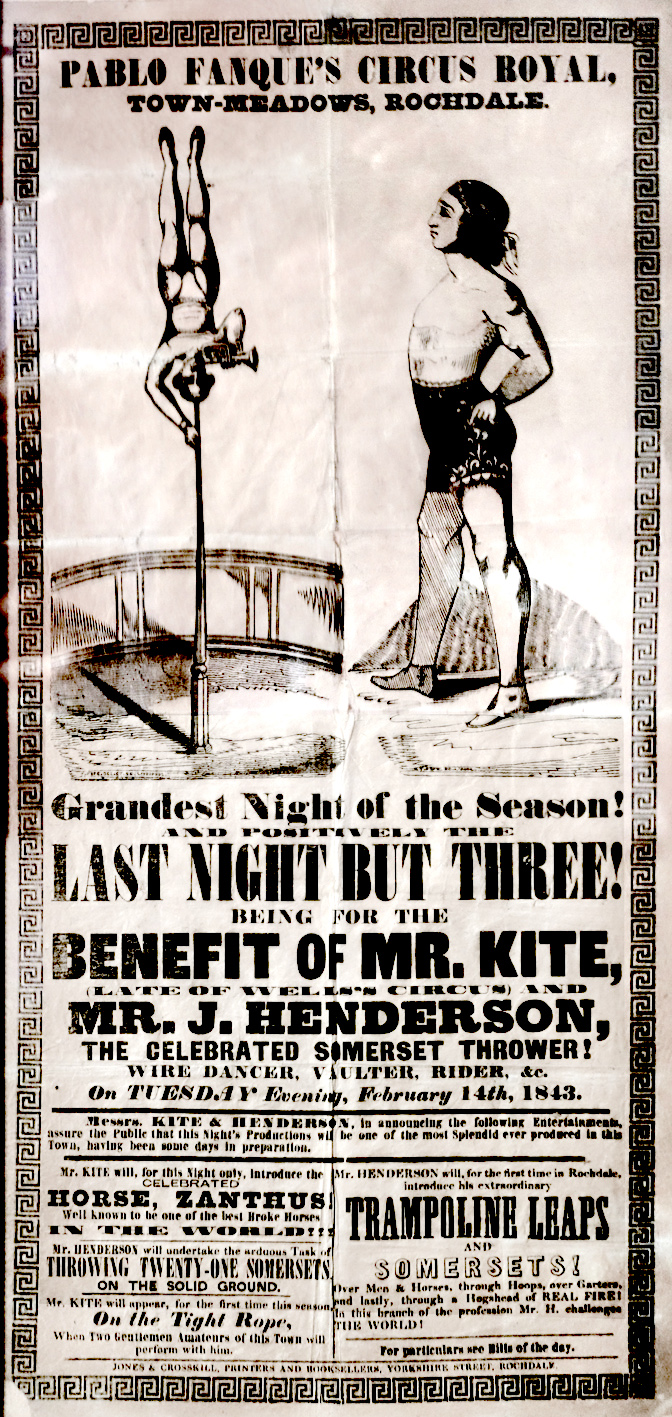
"Being For the Benefit Of Mr. Kite"--When asked about this album by an interviewer clearly gagging for some controversy, Lou Reed spat, "'Mr. Kite? What the hell is that?" To which my knee-jerk reaction is, "Your output since New York? What the hell is that?"

But!

This is one of my favorites on the entire album. John told Mr. Martin that he wanted a musical backdrop that evoked the sawdust and elephant pao paos of a genuine one of a kind big show under the big top, and slap a Scot stupid, that's exactly how it happened! You don't have to have the imagination of a novelist to listen and conjure up visions of high wires, stilts, and waltzing horses. A Wurlitzer organ and no less than four people playing harmonica goes a real long way.

Lennon jacked the lyrics straight off a poster from an antique shop. You do not need drugs when other people are perfectly willing and able to write your songs for you under the guise of advertising their not-quite freak show. His delivery may come off as underwhelming (I often wonder how it would have come across if he'd utilized Macca's "Magical Mystery Tour" bellow) but that can be charming. Like he's selling us on a zombie circus or something.

Rhythm section deserves top billing, honestly. The bass casts a pachydermic shadow and the percussion is truly distinctive. Bass drum to hi-hats for the verse, then a brief tittering in-between.

The stereo features a more prominent organ drone in the left channel, but it's not overkill. I actually prefer it.

"Within You Without You"--The Beatles didn't waste time. Songs longer than three minutes were rare birds indeed. On this album, however, they offer up not one but two songs that exceed 300 seconds in length. One is a masterpiece; the other one is "Within You Without You."

Like "Yesterday," this song features only one Beatle--in this case, George. But whereas "Yesterday" was a simply conceived and rendered ballad, "WYWY" is what happens when hippies get high and talk about their feelings on themselves and other people in maddening generalizations that stunt progress whilst professing to do otherwise.

The Indian track bores me like the most dispassionate sex, and Harrison's words veer from mediocre to wretched to one memorable line ("And life flows on within you and without you.") Stephen Stills had the words to this song carved on a stone monument which stood in his back yard. I guess, when your paramount lyrical achievement is "If you can't be with the one you love, honey, love the one you're with."

Now, I identify myself as a spiritualist. If pressed, I mean. Normally I just identify myself as Jennifer Benningfield, my friends call me Jenn. So the essence of what George is saying not only here but in many of his songs throughout his recording career--recognize your place as a small fish in the massive ocean, an electron/proton/neutron, one life that touches another life that touches yet another life--is something I get. I'm not rolling my eyes at what he's saying, but rather, he couldn't say it in a more interesting way? A way that would engage even the most jaded instead of encouraging their apathy? Give an example, tell a story. The ways that we as individuals impact the world is amazing. The most banal action can trigger a life or death scenario--and we would have no inkling. To consider that, shit, it makes my soul burn and freeze in equal measure. But this song? Tepid. No time for it.

"When I'm 64"--Written by Paul when he was sixteen. I guess it shows, heh. Goofy as mimes pretending clown wigs are cotton candy. This song makes me think of my folks.

My dad is the most singular human being I've ever been around. His beliefs were not progressive by any stretch. He was a staunch Republican, pro-life, pro-death penalty, anti-gay rights...but remember the Clarence Thomas sexual harrassment trial? He believed Anita Hill. Add in the fact he played guitar, and that's two things him and Thurston Moore had in common.

My dad drank. A lot. He was violent. He was crude and often cruel. He terrorized his wife whilst under the influence. He would berate her, demean her, so that the only thing she feared more than life with him was life without him. My dad would tell you all of this, were he alive still and you asked him. Yes, he would say, I got drunk. Spilled more alcohol than most people ever put in their bodies. Yes, he'd tell you, I was a fighter. I was a nasty son-of-a-bitch. If you wanted details, he'd indulge you. Whatever his faults--and they were legion--my old man did not lie. Which is why when he claimed he never once cheated on my mother...I believed him. And still do. All the wrong things he did to the people who loved him the dearest, he copped to them. My guess would be my father never had many dark nights of the soul where he scrutinized his actions and wondered why. I believe he was sincerely contrite. And that was that.

That was...enough. When my father was 65 he was diagnosed with lung cancer. He lived two ambulatory years until the treatment rendered him invalid. My mother was there for him every day of the five additional years he insisted on living. Insisted. No nurses. No hospice. The woman who put up with his crap...who raised seven kids...she fed him, bathed him, did all sorts of things for him that I don't think, in her position, many women would.

Why? She loved him. He loved her. If I wasn't there to see it, to feel it, I wouldn't get it.

Some winter day in the year after my father's condition turned our living room into an infirmary, I was at work and my mom was in the kitchen cooking a ham. For reasons known only to her, she sliced off a hearty enough chunk that it became lodged in her throat when she tried to swallow it down. She and my dad were the only ones in the house. Just my mom, struggling for air...and a man who could not stand up.

She ran to the living room, face looking like it had been splashed with a bucket of blood, gesturing frantically. She was able to help her husband into a sitting position on his pressure mattress so that he could perform the Heimlich and save her life. With arms covered with bruises, welts and scabs, he squeezed death out of his wife.

He died the day before I turned 30. Fuck, I wish he was still here.

That's why "When I'm 64" makes me tear up. A lot of people hate it. I get why. When Pete Townshend called Sgt Peppers "incredibly non-physical" he meant songs like this. It's why some people prefer the Stones. That's music that gets hips moving in the instinctive rhythm of life. Yeah, I get that too. But there's always room for one more emotion.

"Lovely Rita"--The love that dare not ticket you! Macca's such a boss here, the pop song novelist emphatically pursuing and fucking meter maids like a superman. When you listen to this, listen to it in mono only, and turn it up. There's a hundred things happening in this song, and you'll want to catch them all. The rhythm section, again...if these box sets did nothing but increase appreciation for Paul's bass playing and Ringo's drumming, they were worth the price of production. Also, that's how you end a song.

"Good Morning, Good Morning"--Inspired by a Kellogg's Corn Flakes ad, this song is crisp and full of fun. The incorrigible meter reflects its creators domestic restlessness. Paul and Ringo and those horns are fixin' to get me the holy ghost.

Mono throws all these delectable elements together in a pleasant potpourri. Stereo makes all sides retreat to their separate corners. NO NO NO. That's like serving a slice of cheesecake with a bowl of cherries on the side. Think about it.

"Sgt. Peppers Lonely Hearts Club Band (Reprise)"--That drumbeat's stupid. Those distorto guits need to ride the shortest bus.

It was nice of the guys to come back to the initial concept eventually. They're seeing us out here, and that's quite polite as well. An intermission would have been cool. Oh well.

For years all I knew was the stereo version, where Paul's yelling at the end is omitted and the transition to the final song is less than smooth. Mono definitely makes you appreciate it more when

"A Day in the Life"--glides in.

The reputation of this album may well be on this one song. It's absolutely wonderful. John read some stories in the paper, one about a car crash, another about pot holes needing to be fixed (and doesn't that tie in nicely with an earlier song), all over a piano that grows increasingly foreboding until "I'd love to turn you on" and then things go a tad haywire. Plans be gettin' waylaid. The orchestra comes in, building up to a Stockhausen-inspired crescendo and then--Paul! Piano back, bouncy this time, it's Paul's day now, and he's not got time to read. The stories in his head are too fascinating.

The most magnificent part of the entire track: "Somebody spoke and I went into a dream" followed immediately by the orchestral swells and Lennon's soaring "Ahhhhh"s. There are words to accurately describe the majesty of this section of the song, but, alas, they are only known and used on other planets. So, sucks for us here on Earth. Well not really, we get to hear this song. Take that, inhabitants of the planet Zexian!

Then, back to the verse and plateau. A bit different this time, there's the feeling inherent in the maelstrom of notes that there will be no alarm clock rousing a cheerful lad to face a day of coffee, buses, and reveries. And of course there is not. What there is in its place is one of the most famous endings to a song, and one of the best. A single piano chord played by four men--John, Paul, Ringo and Mal Evans--over three pianos, with George Martin joining in on harpischord. The E is so major. It's the end that seems like it never actually will.

Friday, March 25, 2011

You Know the Name: The Music of the Beatles, Pt. 7--Bigger Than Jereboam


8/5/1966

Moving from Help! to Rubber Soul was like going from hackeysack to rugby; Rubber Soul to Revolver was a transition from Seuss to Proust. Taut, confident, daring, and tenacious, the Beatles felt freer than ever to experiment with the possibilities of sound, removing themselves further from their days as teen idols. Avant-garde art--music, film, painting, literature--was becoming a fast fascination for Paul and John especially, but Paul more so (despite various attempts at revisionist history that seeks to sustain the conventional wisdom stating that Lennon was the rebellious, envelope-pushing genius that kept the Beatles music vital. I know, it's hard for some folks to wrap their heads around the fact that the same guy who wrote "Yesterday" dug Stockhausen. But hey, James Joyce wrote some of the most inventive, alluring, demanding prose in history, yet he was obsessed with flatulence.)

Drugs were also open for exploration. Good ol' weed never left the picture, but as the go-to creative stimulant, it was forced to share space with LSD. That said, if you think drugs were the only reason the Beatles wrote and performed at the level they did, you can "x" out of this blog right about now.

Alternate titles: Beatles On Safari (which would have blown Brian Wilson's mind, although by 1966 it was already a minefield that had claimed several victims), Freewheelin' Beatles (which may have given Dylan a heart attack) and Bubble and Squeak.

The cover is a collage of black-and-white group pics cut free of mags, rags and newspapers, which were superimposed on a hair-happy Klaus Voorman line drawing. The Sgt. Peppers cover has been emulated/parodied countless times, but how many Revolver-inspired covers can you recall? It's too unique.

"Taxman"--Paul and George were at loggerheads for much of the band's existence. I don't pick sides, 'cause I didn't know either guy to plant a flag on either side, but damn Paul...you let George get the first song on Revolver then outshine him completely. The bass parts could not be improved upon. I mean, the triplets starting at 0:55? That's "How To Dress Your Middle Eight To the Nines 101." Paul even provides the India-inspired lead guitar scrawl near the end.

Shit, dude. Let the Dark Horse breathe!

Or not, if he's going to be writing songs about the travails of the rich-beyond-sense rock star forced to pay taxes to an apathetic government. I get that George's income placed him in the so-called "super-tax" bracket implemented by Prime Minister Harold Wilson the very same year Revolver was released. I understand that people in this bracket had to pay up to 95% extra income in tax. Harsh. But, even after this travesty, was Mr. Harrison still able to live comfortably? Did he starve? Was he homeless? Was he a fetid cretin with three teeth? No? To all? Oh, cool, shut the hell up then. Besides...dimmer bulbs than Harrison knew enough to open up Swiss bank accounts.

The stereo mix on Revolver isn't as vexing as Rubber Soul, which is namely down to the bottom end getting a seat on the bus this time. "Taxman" does not reflect this improvement, however; the vocals are hard in the right channel, joined later on by tambourine and cowbell. Queerer is the cowbell not showing up in the stereo mix until the second chorus, whereas it can be heard during the second verse of the mono version. Like most 21st century poetry, no rhyme or reason.

"Eleanor Rigby"--Post-war emotional fallout, eating away at a person's skin from the inside out. It's worse to bleed internally. No one can tell you need immediate assistance unless they're paying close enough attention, and most of the time, they aren't.

Eleanor Rigby--the song and titular non-heroine--is dreadfully lonely. There is no redemption or closure here, which is the most enduring element, and rather unlike Paul, all things herded. "Buried along with her name/No one was saved." Fantastic. Depressing as a dead baby pile, but still fantastic.

The origin story of "Eleanor Rigby" is an engrossing chunk of Beatle lore.

Paul had the germ, but needed a little help from his friends. So, he went to John's house, got high and enlisted some chums to finish off a classic. You get high and enlist your chums to finish off a bottle of Cutty Sark. Almost every Beatle contributed lyrics, and band friend Pete Shotton suggested it all top off with the tragic ending of two lonely people coming together at last through the death of one.

Note I said "almost every Beatle." Shotton claims Lennon didn't contribute syllable one. McCartney, ever the generous chap, credited John with "half a line." Lennon, till the day he died, told interviewers he'd written "70%" of the lyrics to "Eleanor Rigby." Who do I believe? Well, large talent and large ego intertwine so passionately, who can tell? Being a creative artist almost demands you be a self-aggrandizing twat as well.

The stereo mix gets the gas face. The separation is no more offensive than usual, but during the chorus, the vocals and musical track come together in both channels, with the vox even louder. (Mind you, I'm listening through headphones, so this won't be so jarring a transition on a decent set of speakers.)

"I'm Only Sleeping"--The ratiug on this 'un musta blew heads from Hertfordshire to Honolulu upon first listen. (Check out the mono for some effects that the stereo lacks. A testament to exactly how little they cared about the stereo mixes when they just take out whole awesome parts.) But pioneers blaze trails destined to be trod upon by all manner of acolytes who in turn will beget their own acolytes who in turn will have little or no time for whatever came before. In the end, the gold you made is judged (many times by bronze brains) against what future hands melted and molded it into.

Lack of historical perspective is disconcerting, but free from such head-spinning juxtaposition, "I'm Only Sleeping" exists as a drowsy stagger through a mist of Vicks Vapo-Rub, a chemical lethargy celebrating laziness as mediation as peace. Lennon, you somnolent bastard.

"Love You To"--George Harrison bestows 'pon the throng hippie crap dressed up as hippie crap. Time is finite and love is both our salvation and our doom, it is the beginning of the end of the beginning, and WILL YOU PUT DOWN THE BOWL AND STOP IT ALREADY. The 1960s in three words from someone who didn't live through them: tripping balls deep.

A song so underwhelming George and Ringo are the only Beatles on it. The intro reminds me of the sand levels in every Mario game from 64 on, and I hate the sand levels. So randomly sinky.

The stereo version sounds a bit sparser, and makes "Love You To" more palatable for it. Still nothing I'd delay my dinner for.

"Here, There and Everywhere"--Paul wrote this song. You wrote your name on a baggage tag in the airport.

Whew. Aphasia almost won out here.

Only a heart sheathed in Sidney-grade armor can resist such an alluring ambush. Paul wrote this by John's pool? You write grocery lists by the pool. If you even have a pool.

McCartney took inspiration from the Beach Boys ("God Only Knows") and Marianne Faithfull (vocal delivery) and a few other things we will never be privy to and created the most magnificent love song in the Beatles discography, and thus one of the most potent spells cast by any magician of the arts. "Here, There and Everywhere" always brings to mind loose-limbed bodies moving in light green and blue breeze, major adoration to minor affection to back again. Everything is elevated, from the unusually high register Paul reaches, the purposeful "ooh"'s from John and George, the gentle finger-snaps, it all comes into focus through the lens of love.

There's so many songs about sex, but the thing about the sex (well, there's that many things about sex) is that the anticipation exceeds the actual event so frequently. So it would stand to reason that songs touching upon the sensual suspense would be greater than those dedicated to humpy pumpy. I know, I know--there's nothing overtly erotic to be located in Macca's lovestruck ballad, but listen up. He wants his love to be here, there and everywhere. Doing this, that and everything. Follow that light, and see where it's extinguished.

"Each one believing that love never dies/Watching her eyes/And hoping I'm always there."

John Lennon just loved this song, and he had jack to do with it. George Martin put on a hat just to take it off. More importantly, I am in love with it, enough to make it my second-favorite Beatles song. Not even its inclusion. in the "Phoebe Gets Married" episode of Friends can tarnish its luster. In stereo, it remains immaculate.

"Yellow Submarine"--So, how does one follow an achievement like that up? One leaves it up to Ringo, one does.

Paul wrote this in bed. You sleep in bed.

Despite the enthusiasm of analysts to assign deeper, druggier, more socialist meaning to "Yellow Submarine," the truth remains that it's a friggin' children's story. About a submarine that is colored yellow and can be found in the rickiest of Watters. Bubbling and squeaking.

It's so goddamn whimsical I could shit out Care Bears. I am in a way loathe to loathe such a kind-hearted trifle, but again...this song was expressly written for children to enjoy, so fuck it to hell.

Stereo gets fucked twice sideways in a walk-in freezer for omitting part of the songs saving grace, John's crazy-Captain shouts (specifically, "A life of ease!" I missed it, anyway.)

"She Said, She Said"--So George is partying and tripping paper plates and then suddenly he gets all paranoid and "George is gettin' upset!" and he thinks the life is leaving his body. Fellow room-occupier Peter Fonda interjects and provides what self-absorbed addicts regard as "comfort": a gross story about ten-year-old Peter, who was likely called "Pete" or "Petey" at that tender age, accidentally shooting himself in the stomach and "dying" three times whilst on the operating table. "I know what it's like to be dead," he told George and John.

A person who has evaded the Big Sleep will often feel that they have passed over into the Big Awake, a sublime comprehension of the mysteries of existence. These people wax ecstatic on Multiplicity, or seek every day in every way to remove themselves from the tyranny of materialism, and if ever faced with them, you may not last more than two minutes, so tread wisely.

Lennon took this unsettling experience, switched the gender, and behold, a jangly jumble that rewards repeat listenings and features...Ringo's greatest performance ever? Hmm, let's break up into small groups and discuss this.

"Good Day Sunshine"--Paul wrote this at his best friends house. You pass out drunk on the couch at your best friends house.

An awful damn cheery helping of the ol' soft shoe, replete with piano rolls and positive vibes ricocheting off walls and floors. Top hat tuneage, spiffy and steppin' out.

"And Your Bird Can Sing"--Possibly a Stones diss, but disappointingly scorch-free if so. The "bird" supposedly refers to Marianne Faithfull, siren/Stones hag/candy bar spokeswoman. "But you can't see me," Lennon claims (rather unconvincingly), a little too close to a future, even druggier, far stupider John for my comfort level.

To hear it in stereo is a better deal, with the lust-throat tightness and effortless swing more immediate to the ear. It's not double-bolt rock 'n' roll, but it'll do in a pinch.

Note that only two of the album's fourteen songs surpass three minutes (topping out at 3:08 for "Love You To," which, if you will recall earlier in the review, is hippie crap). Another reason the Beatles kinda ruled. Brevity. Soul. Wit.

"For No One"--Paul wrote this song while on a Swiss skiing holiday. You, on the other hand, ski during your Swiss skiing holiday.

Love affairs reeking of promise, why do they die? Utilizing the always-tricky second-person narrative, Macca details a collapsed romance, a story that is only as interesting as the teller makes it to the listener. The content is basic, but Paul's pace control and cadence mastery push it to the finish.

"Doctor Robert"--I could make a list of Beatles tracks that are treated with apathy by most of the fanbase that I just happen to regard as the bee's knees, but don't you think this blog is enough? I mean I write it all out longhand, then type it up. I'm only one woman, after all.

Charles Roberts was a real-life, punch-him-and-he'll-sue doctor based in New York, whose generous prescriptions of illicits made him beloved by celebrities both fake (Warhol's entourage) and real (the Beatles).

The guitar always does it for me, grit-textured and grinding like a junkies bones. A catchy ode to the seedy enablers lurking in the nooks.

"I Want to Tell You"--George increasingly felt fettered within the band. By most accounts, he became disillusioned with being a Beatle the quickest, and it may not have happened if John and Paul put the time, effort and care into his songs that they did with their own compositions when it came time to record.


I want to tell you

My head is filled with things to say

When you're here

All those words, they seem to slip away

......
I want to tell you

I feel hung up but I don't know why,

I don't mind

I could wait forever, I've got time

It's not a stretch to say George is passive-aggressively addressing his bandmates (perhaps Paul more so). Although that's a personality trait I rather despise, it's preferable to hippie crap.

"Got To Get You Into My Life"--We've had songs with strings, now bring in the brass! (Not for nothing did Earth, Wind and Fire cover this. That, and the exquisite bridge.) Horns blare and bluster, but it's Beatles wholeheartedly, unabashed fans turned pugnacious artists.

Who is Macca so hot after? A doctor, a lawyer, a groupie? No, it's just weed. Dude is so mellow he makes corpses seem uptight. I roll my eyes, but Paul rolls up another joint. I gotta hand it to him, he takes the simplest, silliest song subjects possible and produces sweet honeysuckle tendrils.

The stereo version sounds good if you're high. I suppose.

"Tomorrow Never Knows"--John's psychedelic baby, a tape loop masterpiece that answers more questions than it asks--literally. "Turn off your mind," how Leary. Life like death. "Love is all." Which it is, but it sounds cooler when it sounds like the world is melting around you.

Lennon despised his singing voice, and instigated engineer Ken Townsend to invent Artificial Double Tracking (ADT). This would make the recording process easier for the Beatles, and became industry standard until the 1980s. Ho-hum, another day in the life.

I imagine that this song is a good recreation of a fairly decent acid trip, but Ringo's drums always conjure up the debauched dastardly nights leaving me beholden to a sober friend.

That's not a complaint.

Forty-five years on, "Tomorrow Never Knows" still engages my ears and forces its way into my head. Not so much for the stock-philosophy, but my own feelings and thoughts as so inspired. It's the style of the substance that enriches me as a listener of not just music, but life.

Sunday, March 13, 2011

You Know the Name--The Music of the Beatles, Pt. 6: Fierce Bounce


12/3/1965

Under pressure to have a record ready for the holidays, the Beatles began the Rubber Soul sessions on October 12th with very little in the way of new material. In four weeks, the points of the magic square had finished the album that would mark the beginning of their most creative period, sweet sounds from a mixture slowly turning sour. Paul McCartney, like so many undisputed creative geniuses before and after, fell madly in love with his own vision and insisted on taking over the artistic reins, all the better to wend the band towards the sound he heard in his own head.

Growth, division.

"Drive My Car"--The guitar lick that kicks it all off would be the defining moment for a hundred other bands, but for the Beatles its just a toss, a precursor to bigger brighter and bosser. "Drive My Car" is actually end-boss status, and not cheap brutality like Jinpachi in Tekken 5, I mean hardcore hardship like Dracula in Castlevania Dracula X. The guitar and bass line follow each other like baby ducks behind mama, but the resultant sound is much less cute and innocent. There's a nonchalant duplicity in not just the music, but Paul and John on the mic as well.

A nice twist on the horny would-be Svengali tale, with the girl in the position of predator-proffering-prominence. If she bangs anything like Starkey's kit here, that is a better time. The last lines of the third verse are impeccably written, delivered, and surrounded.

Oh my goodness, Rubber Soul in stereo. Wow, so much wrong happening. This is the first album that throughout I am just gobsmacked at how shitty the "fake" stereo mix is. For this song especially. That cowbell can go straight up a cow's ass. It's so irritating in my right ear, like the clock that keeps time in purgatory or something similar. And the piano doesn't drop in so much as it sidles in, which for the uncertain is a vastly inferior arrival method. This is Shyamaylan-level panning.

"Norwegian Wood"--Perhaps most famous for George's hard-earned sitar bits, this is a sweet tale about a female journalist that Lennon was sticking it to, but couched in ambiguous language so as not to clue in his missus. Personally, I think the first three instances of infidelity are "gimmies." But the fourth time around? Whatever you got, I hope you got it good, 'cause you're about to get it bad. Ya greedy slime.

"You Won't See Me"--Paul fucked around on his girl--Jane Asher--as well, but to hear him tell it, theirs was an "open" relationship, so, no harm no furniture on fire. At three and a half minutes, this was at the time the longest Beatles song on record. It could lose a minute and be all the better for it, honestly. Macca's chorus is fantastic, as it is always super to hear a goofy horndog vocalize his realization that despite the fact he cannot, will not stop playing pogo dick, he really really loves his girl, his one true blue, his heart his soul, his "it's your turn this week, luv!"

Stereo brings rare treats, with slightly louder backing vocals and Mal Evans' sustained organ note higher in the mix as well.

"Nowhere Man"--Existential John, a soul trisected. Great for the art, rather not great for the artist and those who cared for him. ("I was starting to worry about him," Paul would confess years later.) This pessimistic projection was inspired by the persistent tumult in Lennon's life: ambivalence about his increasing fame, wealth, and artistic capabilities, as well as his rapidly disintegrating marriage (it is inadvisable to fuck a journalist, is the Trapper Jenn MD "The More You Know" moment of the day).

Paul's bass part speaks, and it says, "Fuck you, I am James Paul McCartney and I am the greatest rock star alive. Your girlfriend wants to drive my car. And maybe I'll let her. Beep beep. Beep beep. Yeah."

On its own "Nowhere Man" is fantastically melancholy. In the context of the album, it suffers due to some questionable sequencing. Both it and "You Won't See Me" feature "la la la" backing vocals, which give the songs a "samey" feel when heard back-to-back.

As opposed to the "lamey" feel of the stereo version. So abrupt, so unnatural-sounding. If you really really want to hear isolated instruments, this is a heaven send. But listening to it on headphones? I know stereo was still a nascent mixing method back then, but if anybody could work a fair miracle, it was George Martin and the boys. And they may very well have done so, if they actually cared about the stereo mix. But they didn't. Mono was it. Decades later, it shows.

"Think For Yourself"--George, rest him, sure could be a sanctimonious git. Always off in the corner, judging you. With his brownie. "Eff it, mate. I'm high, you're daft."

Funny thing, though, about smarmies. If they have this close bud who plays gnarlsty fuzz bass, they suddenly become worlds more tolerable! Even when they put the word "rectify" in a fuckin' rock song!

I keep waiting for the drums to slam and "Be My Baby" to break out, even after all this time.

Fun with stereo, 'cause we sure deserve it: listen to "Think For Yourself" in the left audio channel only. The fuzzy bass is gone, leaving just its unadorned baby brother, and gone also is the extraneous percussion. Not as good as the mono, but not bad.

"The Word"--So high. So, so high.

The Beatles are still the touchstone for anyone arguing that drug use opens up doors in the mind and soul that just can't be discerned whilst sober. I don't have any special problem with that; my only beef is the insinuation that illicit substances make one creative. You either have the artistic germ or you don't; no chemical introduced into the body can make it otherwise.

An informed decision is the best decision.

The Beat-mosts tell us that "the word is love" (Sonic Youth would complete the sentiment on "Flower" 25 years later) while we delight in the groove. Harmonium is the new harmonica. Drones buzz the loudest.

Checking out stereo. What happens to the bass in these mixes? It sounds like it's waving to my ears from the inside of the Grand Canyon while I'm peering down like, what the hell are you doing in the Grand Canyon, bass?

"Michelle"--Paul's baby, save the "I love you"s provided by John under the influence of some Nina. Winner of the 1966 Grammy for Song of the Year. Not bad for a friggin' novelty number--he's speakin' French, y'all!

Only Paul and Ringo actually play on "Michelle," with John offering backing vox while George fucks off in the corner, munching brownie number nine and snickering about what a bubble butt Cynthia Lennon has.

Songs don't get much more stunning; this is a truly timeless composition. Recordings like "Michelle" are among the reasons I'm an avowed Spiritualist. Gifted people can capture glimpses of souls in intermediary states of existence, as the spirit inexorably progresses, and recognize the true profundity of the process. Most people cannot. In the middle of the extremely gifted and the perhaps blessedly ignorant lay the restless antennas, who detect the detritus and toil to transform it into something the corporeally-centered world at large can relate to and rally behind. All your favorite artists fall into this category, regardless of their personal beliefs.

If you put every living woman who was named after this song in the Grand Canyon, my little buddy "stereo bass" wouldn't be so alone anymore.

"What Goes On"--The first song to feature a Ringo writing credit, and wow, it's country influenced!

George thought John and Paul didn't care much for making his songs the best they could be, but poor Ringo. Shame...this chugger could have been a real stand-out with some effort.

New name for the stereo version: "Bass Is Gone."

"Girl"--John breathes about a dreamale, the kind of woman who makes you feel unbearably guilty for fucking that journalist. Except not. What a linear thinker I am, this song is clearly bleary. It's about weed, or it's about the Christian idea that suffering must precede true happiness, or it's about tits, but about a full-bodied girl, no that is not it.

The chorus is as immaculate as the single word it is comprised of. Makes me wanna sprawl out on a Persian rug and conk out until the reek of saffron forces me awake.

"I'm Looking Through You"--Paul again inspired by his failing relationship with Jane Asher. Folksy as shit, so I'm sitting Indian-style on the rug right about now, rocking back and forth, murmuring "Throw some, throw some Rogan Josh on that bitch." Ringo rocks the Hammond here, and unwittingly provides the Monkees with like a third of their catalogue. Seriously, just close your eyes and visualize some boy hijinks involving running up and down a shoreline, sun setting in the background. Yep.

Disillusionment makes a sad Macca. "You're not the same." You used to let me fuck three other women a week, what happened?! John got less grief from that journalist!

The stereo is just, ugh, so boneless.

"In My Life"--This one and "Eleanor Rigby" are the most contentious compositions in the whole discog, so far as who wrote what. Paul credits himself with all the music, while John countered that Paul provided only the harmony and middle eight--odd, since "In My Life" doesn't actually have a middle eight. Hmm.

Who you believe says a lot about who you prefer, or does it? I'm a Paul fan-girl through and through, but I don't blindly think his word is gold. I think either man could have realistically come up with the Miracles-inspired track.

You can't doubt how redoubtable "In My Life" is, though. Plain-spoken and flawless, from Lennon's double-tracked vocals that just make his sentiment more devastating, to the perfect electric piano solo, I'd want to claim it as my own too. Keeps it simple, but not stupid. Keep in mind, the heart is the strongest muscle in the body.

"Wait"--Dates all the way back to Help!, and sounds it. Not a diss, by the way, but I kinda resent the way the chorus is all happy hog shit while the verses are just demo-status.

"If I Needed Someone"--George was off in the corner, brownie crumbs all over his shirt, silently judging Roger McGuinn, when he decided, "Eff it. We're the greatest intentionally misspelled animal name band around."

As much crap as I throw at Ringo, he really is outstanding behind the kit. In the pocket like lint or pennies destined to drown.

"Run For Your Life"--Really? You're going with this song? Crazy little thing called domestic violence? Black and bluesy? A little bit me, but mainly a lot bit you, you slag?

The chorus melody is as incredible as Lennon's ridiculous jealous-guy misogyny. Mind you, I find "Under My Thumb" by the Stones more offensive. (The smug power-tripper Jagger voices just makes my skin crawl.) But I'm not really into ranking threats against women. Anyone who really truly knows me is aware that I grew up in a household where violence against women was a frequent occurrence. I could tell you some stories to chill your flesh. I won't. Hell, you're a human being on this planet, you have your own horror stories...you don't need mine. I'm sure you won't have to stretch your imagination too far.

Lennon's own abashed admissions to beating his first wife make this song the definition of "guilty pleasure," and in later years he called it his least favorite Beatles song.

The most infamous lyric, "I'd rather see you dead little girl, then to be with another man" was jacked wholesale from Elvis' "Baby Let's Play House (So I Can Beat the Hell Out of You In Every Room)". We also have "You better keep your head, little girl, or you won't know where I am." That's right; be like he wants you to be, or die. Leaving is not an option, unless it's you leaving the planet. Or spending your life on the run from a sick obsessive asshole, changing identities and isolating yourself from friends and family for the sake of your life. Run run run.

Friday, March 11, 2011

You Know the Name--The Music of the Beatles, Pt. 5: Semaphores and Chromatophores


8/6/1965

A trio of certainties:

1. One successful film starring a wildly popular band of young men will beget another.
2. That film will not be up to the quality of the one preceding it..
3. The accompanying album, however, will be better.

Finally, an album that gives the discerning listener a chance to hear the individuals that comprise the whole. For John is not interchangeable with Paul who is in turn not at all synonymous with George. (Insofar as Ringo goes, he has whatever personality they decide to give him for any one song--which is all he gets.) All three were brilliant translators of their own distinguished muse, creative demons with halos that became increasingly incorrigible when faced with greater fame, riches, and expectation. To stave off immolation, the Beatles wielded the shield of introspection.

"Help!"--A plaintive cry from a man who one cliche-ridden night looked hard in the mirror and saw a swirling morass glowering back.

It's a brave soul who'll flick open the blade to carve open their fleshy bulwark, exposing the most vulnerable parts of themselves to an air that may cause it to wither. It's a strong tongue that is able to admit a weakness that no thick-headed will to power-speech can overcome.

The idea of a real man being a man who holds his emotions so close to the vest that they leave an imprint on the skin of his chest is ridiculous and immortal. It greases the gears that power the planet, yet stymies progress simultaneously. Contradiction and turmoil are real, more true-blue than any silly sub-standard of living passed on from fucked generation to fucked generation.

"Help!" is real. Which isn't to say songs about failed or flailing romances are fraudulent. But they're easier to write. Songs like "Help!" take some digging, conjure up unpleasant memories, produce vital fluid. Lennon felt that in all his time as a Beatle (which ultimately was not all that long) he wrote only two "genuine" songs, this and "Strawberry Fields Forever." Second-guessing this is pointless; he wrote the fucking songs. He knows what he's talking about.

The commercially-driven decision to quicken the tempo disappointed John, and indeed it sparks off images of mad-lad hijinks through the narrow streets of London rather than a desultory everyman turned demigod wrestling with pain and pleading for a remedy. Conversely, the contrast in lyric and tune juxtaposes neatly with the idea that contradiction as supreme impetus.

The stereo and mono mixes offer different lead vocal takes, on this and other songs, but nothing too drastic all told--John does sound a bit more assured in mono, and thus less in need of assistance, but trust that he's in dire straits all the same. His mates, being mates, are sympathetic, particularly George with his "broken chords" during the "Won't you please" sections.

"The Night Before"--All Paul. Wall to wall. Posted up like a mailbox.

More mates being stand-up here: over a punchy strut, Paul laments a fairweather love while John and George provide a mellifluous response from across the Salisbury Plains. It's fairly sublime stuff considering that it's just, again, a lamentation of a fickle bird. I quite dig Paul candy-coating the reason he's so friggin' distraught--ridiculously fantastic sex.

"Treat me like you did the night before."

What, when she taught you how to play chess? No. When she manipulated her limbs in a manner akin to an Olympic gymnast? More like. I see you and your filthy rock star ways, you filthy rock star.

"When I think of things we did/It makes me want to cry."

Like your very first checkmate? Never. Like the blowjob that made you see spiracles? Always.

"You've Got to Hide Your Love Away"--Lennon as Dylan again, and this time blatantly so. Feel the prick of the patchy facial hair on a careworn face hidden by that insanely ugly hat will you for the love of Pete Seeger take that off yer friggin' head! Do genius and heat both exit the body via the same route? Hmmm.

The gentle acoustics and near-subliminal percussion are coasted alongside perfectly by John, who almost out-Bobs his new hero. (I still think the Traveling Wilburys existed solely for Jeff Lynne to remake this song over and over, much like he started ELO to plop out endless variations on "I Am the Walrus.") The flutes on this song represent the first instance of outside musicians on a Beatles track, and make fantastic sense to boot.

Considering this song I must consider a greater, graver question. Why must we women be so wicked? Well, we kinda have to. Men won't give us equal footing on political grounds or social grounds...the glass ceiling in the workplace has not been shattered into oblivion just yet...and physically, well, need it be said? Given the host of disadvantages, mind games are the only way we can feel like real players. I don't condone it.

I would hope that men and women worldwide can join together in decrying how much louder the vocals are on the stereo mix of this and most of the songs on Help! Honestly now.

"I Need You"--George's first original on a Beatles album since With the Beatles is a serenade to Patti Boyd. A relationship that would totally end well. Hey, at least there were no tattoos involved. I think.

Sloppy riffing, afterthought vox harmonics. Stereo just accentuates these flaws. When it comes to songs called "I Need You," well, it's just like chocolate--America does it better.

"Another Girl"--Macca for the very first time provides lead axe work, via that nasty solo near the end.

Keys open doors, unless the locks are changed. But what happens when the keys are changed? Beatles in a nutshell.

Country like a breakfast of scrambled eggs, bacon, biscuits dripping with butter and jam. Clearly, our man has moved on from "The Night Before."

"You're Gonna Lose That Girl"--So is John threatening to steal his mate's bird just to make a point, or out of sincere concern for her well-being? The latter, I'd say, though I'm more than a bit swayed by the 50s style dude-group vibe this song exudes. Shiny suits, bow ties, pompadours, kill 'em with kindness. This song features a tempo shift that's really like a mood shift that is in actuality a pole shift.

Finally: Ringo plus bongos equals, what else? BINGO.

"Ticket to Ride"--So ends the "Help!" soundtrack portion of our program. There's a stormy heaviness bordering on menace here, in the caveman plod 'n' roll of Ringo's drums, in the shimmering-now-shuddering chord work (which guts the fish a bit more in stereo, to its credit).

Song meanings are important to many, not so much to others. Per Macca, the ticket in question is one that will earn you a ride on British Railways. But then Lennon said that it referred to cards carried by Hamburg hookers meant to indicate the waters were clean, so dive right in. I believe in both interpretations. A whore riding the train. Harlot on the rail! So poetic. Anyway, just crank this shit. But if you need me to implore you that, we both got problems.

"Act Naturally"--Dr. Hook and the Medicine Show wanted to get their pitcher on the cover of the Rolling Stone; Buck Owens wanted to make the Grand Ole Opry. Here's to dreams coming true, even if they are piss-poor.

Putting this song on this album is like featuring clams in a documentary about frogs.

Friggin' Ringo.

"It's Only Love"--John said this song featured a "terrible lyric," and frankly that's brutal. Yes the first words are "I get high," and there's never much promise inherent in such a salvo, but it only improves. Praise due. This is a nice song to sit on the porch and drink sweet tea to.

"You Like Me Too Much"--Snoopy could scouse shuffle to this in a French cafe while wearing a scarf, I don't doubt. George makes up for his earlier, plainer sin. Still, not a hair of a hint that this same would someday write and sing "Something."

"Tell Me What You See"--Gentle, watery, bright-eyed beseeching. The solace of a McCartney composition is always the ideal counterpoint/part to the jostle of a Lennon original. Their chalk and cheese relationship is still being misinterpreted by otherwise intelligent fans as we speak.

"I Just Saw A Face"--I love how, title-wise, this song answers the previous one. Paul on both, to boot.

Like "When Doves Cry," this song lacks a bass track. Unlike "When Doves Cry," this song doesn't make me think of a very skinny black man with a John Waters moustache emerging slo-mo from a bathtub. Manic in the way John Denver flew planes.

"Yesterday"--For my money, "Here There and Everywhere" is Macca's most exquisitely rendered love song. I'll obviously elaborate when I get to Revolver, but suffice it to say that particular song is still to my mind radically underrated. This is not to degrade "Yesterday." Three thousand cover versions can be wrong...but they're not.

I understand why "Yesterday" is so universally beloved. So do you. Listen to it. While Paul's chord changes defy the routine, they are decorated with saccharine strings (that are affecting and effective regardless, damn them) and simple words.

Yesterday
All my troubles seemed so far away
Now it looks as though they're here to stay
Oh I believe in yesterday

Basic.

Why'd she have to go
I don't know, she wouldn't say
I said something wrong
Now I long for yesterday

So basic.

That's why we listen to music instead of reading it from paper.

Paul's phrasing on "Yesterday" is simply brilliant. Tunefully disconsolate in the verse, then halting and haunting in the chorus.

This one broke the Beatles beyond the teeny-bopper demographic, for which any fan of theirs should be grateful. Still, it remains too soft for many to swallow, and was famously dissed (along with "Michelle") by a likely-green Dylan for its dime-a-dozen stench. It was also not-famously degraded by a fat NYU student in line for a Sonic Youth concert at Central Park in 2002 for Paul's original lyrics: "Scrambled eggs/Oh my baby how I love your legs." He used this as his main argument that John was the superior songwriter. Unbelievable. And there I was just about to tell him how much I loved his performance in Se7en.

"Dizzy Miss Lizzy"--"Hippie Hippie Shake"? Oh no. It's better. Fathoms so. Mainly 'cause Tom Cruise never douched it up in a movie whilst this played in the background. A nice cap to a fine record, this cover was suggested by manager Brian Epstein to justify his salary. Well done! Beats piss out of "Mr. Moonlight." Tight and loose, neat and frayed, cut and cured. The fuckin' Beatles.


Sunday, March 6, 2011

You Know the Name--The Music of the Beatles, Pt. 4: Starts At a Penny, Drops Dead On a Dime


12/4/1964

I won't lie...this was a difficult one to get the victory underpants on for. By and large, Beatles For Sale is buttcheeks. It is unquestionably the cock-staple of the entire catalogue. Just look at the title; always makes me envision a truck driving down the street, getting the funniest looks, four young lads with desultory faces hanging out the open side-long window as some oddly-accented man with plentiful facial hair hangs out the window of the passenger side door whilst banging a tin can against said barrier between him and certain injury, all the while screaming, "BEAAAATLES FOR SALE! GET YOUR BEEAAAATLES FOR SALE! GET 'EM WHILE THEY STILL DON'T STINK!"

The boys look busted as hell on the cover, the inevitable side effect of touring your ass off, shooting movies, banging groupies, giving good media head, and yes yes recording music. All of which aided and abetted the general mediocrity of this album, but none of which deterred their rabid fanbase from placing 750,000 advance orders, at the time a record. The phenomenon could not be stopped. And don't they seem thrilled.

"No Reply"--For a potential cuckold, Lennon never seems very furious here. Even when he claims "I nearly died!" I don't believe him. Phil Collins sounded more distraught when faced with the same scenario in "Misunderstanding."

"I'm a Loser"--Misspelled on original pressings as "Loseer." Which is still far more tolerable than "looser." Of all the spelling errors which raise a phoenix-like homicidal rage inside my gut, that's the screamer.

John as Dylan. "I'm a loser/And I'm not what I appear to be" says it as good as any. "Is it for her or myself that I cry?" shows self-awareness that these early songs generally lacked. Still, Lennon doesn't go many leagues deep into self-loathing; there persists that general vibe of "Yeah, I'm kind of a phony, and I blew true love, but I'm beseeching you in song to not make the same utterly tragic mistake I did. Meaning I remain cool in the bigger scheme. Despite this rather douchetastic straw hat."

(Everyone loses in stereo, as John is just way too loud. Like a blue whale in a goldfish bowl.)

"Baby In Black"--A mournful track inspired by Astrid Kirschherr, a photog friend from the Beatles salad days in Hamburg. Always skipped.

"Rock and Roll Music"--This is more like it. What is it? Rock and roll. One is all it takes for the guys to make Chuck Berry's classic their very own, right down to the willful mispronunciation of "hurricane" and the phantom "and" of the title. This is a song meant to leave throats and butts sore. Save the ice packs and lozenge spray for later.

"I'll Follow the Sun"--Paul, like his partner of a few songs ago, is unappreciated by his paramour. But while John is being underwhelming, Paul is being poetic and philosophical: "Tomorrow may rain, so I'll follow the sun." A lesson for any woman that Maccas do not grown on trees, so show some due appreciation if you are so lucky.

"Mr. Moonlight"--This is the worst song ever on a Beatles album. "Rocky Raccoon" might be the worst original composition, but this is the dubious overall champ of chaff.

It has a lot which suggests, before you hear note one, that it really won't be very bad at all. Originally performed by Dr. Feelgood and the Interns, it was written by a Roy Lee Johnson. What an impeccable middle name! Featuring a Hammond organ? Rich creamery butter, more like!

I don't know exactly what went wrong; the Beatles are the most overly-documented band in history but I've never read an in-depth look at precisely why "Mr. Moonlight" is so rancid. I have a list of the Top Ten Things I Would Rather Have Shoved Into My Arid Womanhood Than Listen To The Beatles Version of Mr. Moonlight, y'all. And I have to specify, because the Hollies did a cover of this around the same time and it was actually okay. The Hollies! The band who made a semi-career out of decimating Bob Dylan songs!

The Hammond section sounds like the theme to any number of movies featured on Mystery Science Theater 3000. Crap ahoy, the signal sounds.

This song is so bad that my dear friend and fellow Beatle freak Patrick didn't even rip it to his ITunes. And he fucking rips everything. Well, there was another Beatles song that he left off too. But you'll have to wait for that reveal.

I don't believe in Beatles no more, mama.

"Kansas City/Hey, Hey, Hey, Hey"--Scratch that; faith restored. Sorry to make you get up, mom! Love you!

Paul ain't Little Richard, and he ain't even John's anomic white boy take on black rock, but this'll do, boy. This'll do. I can almost hear the wistful wave goodbye to their past in these covers. The clean break necessary for growth is closer to realization.

"Eight Days a Week"--Lennon never liked this one, but I bet Lennon never liked tacos, either. Prove me wrong if you can, but I think he would just hate the way the shells would break.

Sublime in its sappy simplicity, so need I tell you who wrote it? And for not thinking too highly of it, that's one hell of an anguished, needful little exclamation leading into the chorus there at 1:29. Favorite part of the song? For me, probably. I look forward to it every time, I can hear it in my head in the seconds leading up, and ah damn, it rattles my chest every time.

First song to ever fade in? Maybe. First song ever brought into the studio unfinished for the fellas to gussy up? Fa sho.

"Words of Love"--Paul idolized Buddy Holly, and I wonder if he was too intimidated to attempt a better song. Pity, 'cause my Beatle sense tells me they would have ripped the hide off of "Peggy Sue."

"Honey Don't"--First on the Honey Don't List is 1. Give Ringo A Song, but aahhhh, you did it anyway! Damn you, English manners. Carl Perkins' proto-Time Warp Tickers Theme is given a lifeless run-through, while I am reduced to tears, knees stuck to the carpet, hands clasped raw begging for CLEAN BREAK CLEAN BREAK CLEAN BREAK.

Second on the Honey Don't List: Try To Make a List Cooler Than Jenn's List Mentioned in the Mr. Moonlight Review.

"Every Little Thing"--Although Paul wrote this song, he let John take over lead vocal duties, a rare occurrence in their maddeningly wonderful universe.

Imagine the Potions class at Hogwarts being taught by Professor McGonagall instead of Snape and you've got the feel of this one. Not as greasy, or sexy, no soul shot through with holes, but much more soothing and liable to turn into a cat and back again. Also, less sibilance.

"I Don't Want to Spoil the Party"--A very personal song for Lennon, the rather trite scenario of a lonely dude stood up by his girlfriend at some party where hopefully everyone's having too much fun to notice anyway much less use it against him in the future is actually a gentle cover for deeper feelings of alienation and hurt. The music doesn't sound near as worn-down as the words over it, and how sad that he's actually going to seek her out. Also sad is rhyming "sad" and "glad." It doesn't make me mad, but there are greater combinations to be had.

The prominent memory this song stirs up in me involves my dad. In the 90s Roseanne Cash did a cover of "I Don't Want to Spoil the Party," and how she goes from "Seven Year Ache" to that is a ponder for sure. The only reason I even knew about Cash's cover was because my dad played country radio constantly. Me and my dad didn't have many conversations real and true (understood to mean exchanges of more than five sentences per person in one face to face setting) because neither of us really knew how to talk to the other.

It was a bold me that spoke up in the kitchen that day.

"That's a Beatles song. I mean originally."

After a few anxious seconds silence, my dad growled out--in that inimitable cornbread 'n' gravel voice--"Yeah, well, this here's the good version."

"What You're Doing"--Some beautifully intricate picking and a freakin' drum intro distinguishes this Macca cruiser.

"Everybody's Trying To Be My Baby"--More Carl Perkins. This is it. This is the break. I heard the snap. It's like Dave Dravecky's arm in stereo, except it sounds better in mono. Boom goes the gyromite, and soon, zoom go the Beatles.

Demarcation points are rarely so breathtaking. The first phase of the Beatles ends here, and the second, much more intensely creative phase, looms.

Wednesday, March 2, 2011

You Know the Name--The Music of the Beatles, Pt. 3: Give the Drummer Some


7/10/1964

The Beatles! On the big screen! Hear the sirens and screeches, delight in the custard-like caterwauling of carnally confused cornfeds! The clarion call of strings that sends the world atwirl and the steady pulse that holds it in place is all around! It's Beatle-goddamn-mania, and your parents are real peeved! Women and girls are going fruitbat psycho over the juju carefully concocted by these huggable rebels and their gruff handlers! But don't be sad, Michael; it doesn't mean girls will never like you--they just won't ever like you the way you are right now. Follow the devil-might-deign example of these laugh-a-minute moptops and you'll be beating back the finger pie with two whole hands!

I'm so glad I'm not reviewing the movie. What kind of witch with words, what sort of sorceress of sentences would I have to be to construct paragraph after paragraph expressing one sentiment and keep it interesting? The movie is just hysterically great. How do I get that across without causing a readers eyeballs to force themselves free of their sockets so's they can roll onward to freedom in a blessed land where they shall never be subjected to my writing ever again?
Lucky for you and your balls, I can do the album a bit more justice.

"A Hard Day's Night"--Sure-fire cure for the sequencing headache blues. Put all the songs actually in the film on side one, and all the ones written for the movie yet absent from it on side two.

A Hard Day's Night was the first Beatles LP filled with naught but their own compositions and not shockingly, it is my favorite of their pre-Revolver material. 9 of the 13 tracks were 100% Lennon creations (his songs outnumber Paul's in the catalogue on the strength of this album) and despite my avowed Macca fangirl status, he would have been hard-pressed to match his mate track for track.

I said 100%. Oh, okay. Ringo helped a bit too, with a delightful malapropism that gave title to song, album and film. Quirky bastard done blessed a trilogy of greatness.

What we have here, ladies and gentlemen, is the perfect song to kick off an album, a film, a day, a night, an affair, a mission, a quest, a new beginning, the world...it's so unimpeachably good. Yes it's basic boy-loves-needs-wants-girl and that's hackneyed, but only in the same way that breathing can be considered "hackneyed." It's love, pretty much, and it hasn't been improved upon.

"When I'm hooooome"--see, that's cool like a good friend. But the subtle baby cowbell just under it? Love, straight up, I tell you.

The opening chord that sparks from George's Rickenbacker twelver has been dissected. Also bisected. And is responsible for the creation of numerous sects worldwide. Less effort and relative brain power has gone into the amelioration of several national economies than the anatomization of this single strum. (Fadd9, by the by. Name a dog after it, why not.)

The stereo version is a few seconds longer, which to some folk is like discovering extra pages in the Koran. Ya know. Incidentally, this was the first Beatles album recorded on four-track tape, ostensibly allowing for "good" stereo mixes. Interesting idea. I do have a soft spot in my head for the minimal stereo sound here, though, it's like shimmying while sitting 'cause you're trying to hold back the urge to pee.

"I Should Have Known Better"--"Just a song," the author was heard to remark. "It doesn't mean a damn thing."

1964 was the year the boys met the Bob, as in Dylan, who turned these quite alive men on to weed and better lyrics, both independently and dependently of each other, I would imagine. John says this is their first song to reek of Zim's influence, but shit if I can hear it.

"If I Fell"--It's a love-a-line with Lennon over here. Probably the most Macca-esque tune he ever wrote. You know how those go: first it creepy-crawls into your ears, tickles the hairs, slithers bewitchingly to the brain, then it's game over. The dual lead vox is not at all fair and is actually killing me, Smalls.

Oddly--and unnecessarily, she was seen to underline--the stereo version double tracks John's opening vocals.

"I'm Happy Just To Dance With You"--George got ornery, so John threw him this bone of a bone. Proof that despite the evident giant strides, it was tough to abandon the simple formula that scored 'em more pussy than a Chinese stereotype.

"And I Love Her"--Song five! Oh hi, Paul! My Wiseauian surprise and delight over meeting you here cannot be contained. While "And if you saw my love/You'd love her too" is not precisely "Love is not love which alters when it alteration finds," it's that sort of plainspokenness that helped make a phenomenon.

"Tell Me Why"--So much iiiiiiiiiii. Ay yi yi. Also, that double-tracked vocal crap again in stereo.

"Can't Buy Me Love"--Unusual for the Beatles to paint so blue, but it works. Tight like frog ass, with Ringo's beat the ready steady rocketship to rocket hips. It was George Martin's stroke of genius to start off with the chorus. Totally blowing that guy a kiss right now.

(If you are reading this right now, I'm going to assume that you are familiar with the "Paul is Dead" controversy. Maybe you're not a student of the shit like some people, but you have a comfortable familiarity with the basic story. It's just that popular. What many missed was the message sent by the Beatles on the cover to the "Can't Buy Me Love" single. Of the band members, Ringo is the only one looking at the camera. What does this tell us? That Richard Starkey, ladies and gentlemen, is going to live forever. Gear!)

"Any Time At All"--John Lennon always hated his singing voice. That's crazy; that's not too far from the mental process of an anorexic. Think about it; firm belief despite overwhelming evidence to the contrary. But yeah, he would beg George Martin to smother his voice in effects much like one applies gravy to biscuits.

"I'll Cry Instead"--John giving us glimpses of the inner turmoil that would never truly leave him. "A chip on my shoulder that's bigger than my feet."

"Things We Said Today"--Macca, you magnanimous bus stop.

Your sort may or may not enjoy this sort of thing. My sort does, most certainly.

Written whilst on a vacation in the Bahamas with then-girlfriend Jane Asher, this ode to "future nostalgia" is no less affecting in retrospect because the relationship didn't last. Love doesn't work that way. You can isolate those fantastic moments from the unfortunate ones and neither becomes less than what they ultimately are. Rose-colored nothin'.

This is perfect, head to soles, the greatest song the Beatles ever recorded. The verses, the chorus.  (Essentially a master course in how to double-track vocals.)

The Beatles did middle eights like a motherfucker. The one here is so out of place it's right where it needs to be.

The stereo isolation is unbearable. It's like keeping a parent from their child, and vice versa.

"When I Get Home"--Great intro, great chorus. "My baby," hey don't sneeze, one of the greatest songs ever is just imploring someone to "be my little baby." And don't cock your head at "Gonna love her till the cows come home," 'cause this is the Beatles, so you know it's only the bestest cows. Like Irish Dexters or something.

"You Can't Do That"--What, satisfactorily follow up "Things We Said Today"? True, true. But hey hey, the Monkees made a whole albums worth of material off the first few seconds along, so. Peppy but not peppery.

"I'll Be Back"--Gee, that's kinda anticlimactic. Oh well. I'll be back too. See you then.